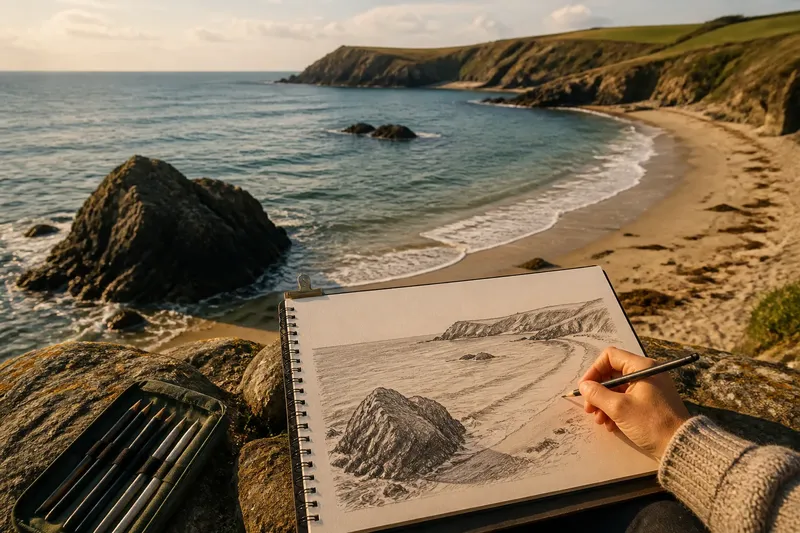
Why a Curving Shoreline Makes a Walk Feel Different
A curving shoreline walk changes your view, footing and pace at every bend. Learn how to choose a comfortable route without chasing distance.
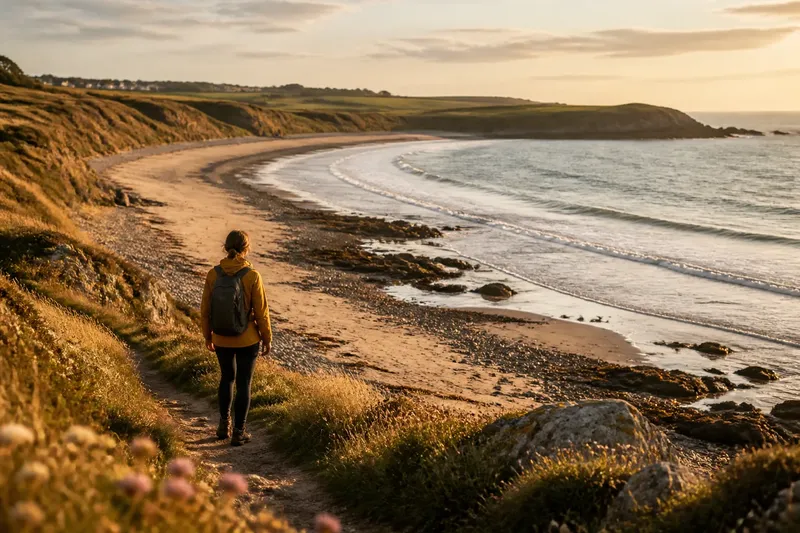
The common mistake on a curving shoreline walk is to judge it by the distance on a map. That can leave you hurrying towards a distant headland while missing the small changes that make the route engaging—or continuing when the return will be harder than expected. A bend changes what you can see, where the ground feels firm and how naturally you move. Choose a pace for those changes, not for a number of miles.
Why does a curving shoreline walk feel different from a straight beach walk?
A straight stretch lets your eye travel along much of the route at once. On a curving shore, the next section slips out of view. You walk towards a partial reveal: a low bluff, a line of rocks, or the next reach of sand. That shifting view gives the walk a series of modest destinations instead of one long visual corridor.
The curve also changes your relationship with the sea. On one part of the shore, waves may approach at an angle; after a turn, they may seem to come towards you. Wind can feel more exposed on an open reach and softer where land or dunes interrupt it. These are changes in sensation, not necessarily signs that the weather or water has become safer.
Let each bend be a point to notice, not a target to reach quickly. A short pause can make the route feel complete even when you walk only a small part of it.
How does a changing line of sight affect the walk?
When a curve blocks the view ahead, you cannot see every stretch you still have to cover. That can make a route feel shorter and more varied, but it can also hide a soft patch, a steep section or a tide-cut passage. Treat what you can see as a useful cue, not a full account of the route.
Look back occasionally. A headland or row of dunes often appears different from the return direction, and familiar landmarks can help you keep track of where you turned. If the route crosses a broad beach, note a distinct feature on land—such as a path entrance or a prominent building—rather than relying on a footprint line that wind or water may erase.
At a bend, stop where the ground is stable and scan the next visible section. If it looks awkward, you can turn back before committing to it. That small decision is easier than discovering the problem halfway across a narrowing strip of shore.
What does varied footing do to your pace?
A curved shoreline may alternate between compact wet sand, dry loose sand, pebbles, rock shelves and patches of seaweed. Each surface asks for a different stride. Firm sand usually allows a more even pace; loose sand and rounded stones call for shorter steps and more attention to balance. A route that looks level from above may still feel tiring underfoot.
Keep your gaze a few steps ahead on uneven ground, and leave room to slow down without having to dodge another walker. Avoid assuming that a darker strip of sand is firm or that a shiny rock is safe to cross. If a section feels unstable, use a broad, clear route around it where available instead of trying to preserve a straight line.
For example, imagine you reach a bend where smooth sand gives way to loose pebbles. You shorten your stride, walk on the firmer edge that remains clear of the water, and reassess at the next stretch. The visible result is a steadier, less hurried walk; if the footing still feels uncertain, you can turn back rather than forcing the route.
How can you choose a pace without chasing distance?
Set your pace by comfort and conditions. On a firm, open stretch, you may walk naturally; around stones or a narrowing shore, slow down and leave time to look around. A route with frequent turns may take more attention than its map length suggests, so do not use distance alone to decide whether you have time to continue.
Choose a clear point to reassess, such as the next bend, a path junction or a place where the beach visibly narrows. At that point, ask whether your footing remains comfortable, whether the route back is clear and whether the tide or conditions are changing in a way that matters to your intended path. If any answer gives you pause, return while the way is still straightforward.
- Pick a turn-back point before you set off, and change it if conditions make the route less suitable.
- Allow extra time for loose sand, stones or frequent stops to look at the view.
- Use a map or local path information to understand where the beach connects to a landward route.
- Keep a comfortable walking rhythm rather than trying to match a pace set on a pavement.
- Leave enough energy for the return, especially if the outward route has been against the wind or across soft ground.
If the route depends on a tide window, access notice or local restriction, check current local guidance before setting out.
What should you look for before following a bend?
Before rounding a point, check whether the shore continues as a walkable beach or changes to cliffs, a seawall or private land. Look for a clear way back inland and note whether the next section appears to narrow. A curved coast can conceal a dead end from view, so do not assume every visible strip of sand connects to the one beyond it.
Watch how water moves around rocks and headlands from a safe position on stable ground. Avoid using a wet ledge or a narrow band beside the water as your only route through. If the passage depends on timing, access signs and local tide information matter more than a tempting view around the corner.
On the return, the same bend may feel different because the view, wind and direction of light have changed. Recheck your footing rather than walking on memory, and use the landward landmarks you noticed earlier to stay oriented.
How can you make a short shoreline walk feel complete?
Choose a modest section with a clear place to pause, such as a broad patch of firm sand or a view back towards the starting point. Walk to the bend at an easy pace, stop to notice how the coast changes, then decide whether another section feels inviting. There is no need to reach the far side of a headland for the walk to have a shape.
A short route can include variety if it gives you a changing view, a surface to pay attention to and a safe, simple return. The useful question is not how far you went, but whether the pace suited the shore you were on.
Do I need to walk around every bend?
No. A bend is a natural place to pause and reassess, not an obligation to continue. Turn back if the footing, access or return route no longer feels straightforward.
Is the water’s edge the easiest line to follow?
Not always. The edge may be soft, uneven or narrowed by water, while a higher section offers firmer footing. Choose the clearest comfortable ground rather than following a fixed line.
Why does the return walk seem different?
The view changes direction, and the wind or light may feel different on the way back. Keep checking the ground and use recognisable land features instead of assuming the outward route will look identical.
How should I decide when to turn back?
Turn back when you reach your chosen point, when the route ahead becomes less clear, or when your comfort or conditions change. A curving shoreline walk works best when you leave time and energy for the way home, not when you press on for the sake of distance.