Before the Beach Basket: A Brief History of Seaside Picnics
The history of seaside picnics is less about a single basket than portable food, changing habits and the practical choices that make a shore visit linger.
The common mistake in telling the history of seaside picnics is to make the basket the starting point. Food could travel in a cloth, bag or box long before a purpose-made hamper was chosen for an outing. The more useful story is how people made a meal fit the route, the shore and the time they wanted to spend there.
There is no single origin to pin down here. Rather than claim a neat timeline, it is more accurate to look at the practical choices behind eating outdoors: what could be carried, how it could be served and whether the meal was a necessity or part of a planned pause.
What did people carry before picnic baskets?
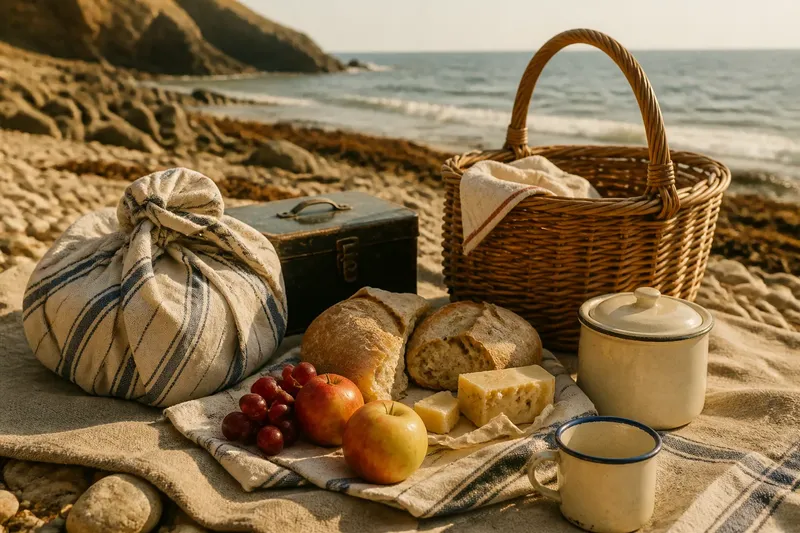
Before a dedicated hamper, food could be wrapped in cloth or packed in a bag, box or covered pot. Travellers and workers needed provisions away from home; a visit to the coast was one setting where such food might be eaten.
The route shaped the menu. Bread, cheese and fruit were easier to carry and eat without a kitchen than a meal needing elaborate preparation. A shared outdoor meal did not depend on a special container or a formal name. It depended on food that travelled well and a place to stop.
Keep the distinction clear: the basket made carrying a meal more convenient, but it did not invent eating outdoors.
How did a shore visit become time to linger?
A trip to the coast might involve work, travel, bathing or walking, as well as leisure. Eating outdoors could fit between activities, giving visitors a reason to pause instead of turning back as soon as they had reached the shore or finished a walk.
The setting mattered in a simple way. A visitor could sit, look out to sea and eat without needing a dining room. Carrying food also meant the group could choose when to stop, rather than plan the whole outing around finding somewhere to eat.
That was not everyone’s experience. Access to transport, leisure time and suitable food varied, and the coast itself offered different conditions from place to place. Avoiding a single sweeping history makes room for those differences.
What did a purpose-made hamper change?
A dedicated basket brought the meal together in one carrier. A handle helped with carrying, a lid kept items contained, and compartments could separate serving pieces or prevent them shifting. Simpler baskets suited a modest meal; more elaborate hampers could include items for serving.
Those additions changed the kind of meal a group could bring, not the basic idea of eating outside. Plates, cups and cutlery made a planned spread easier to arrange, while bread and fruit needed less equipment.
The trade-off was weight and bulk. For a long walk over sand or uneven ground, a large hamper could be awkward; for a meal centred on sitting together, the extra pieces might feel worthwhile. Choose the carrier to suit the route, not its appearance alone.
How did picnic food and serving habits vary?
There was no fixed seaside menu. The food depended on what a household could prepare, the journey and the way the group wanted to eat. Portable items that needed little serving suited a quick pause; cups, a cloth and prepared dishes could make a longer meal feel more like an occasion.
Imagine a family planning a walk to a pebbled cove. They start with rolls, apples and a cloth, and choose a light basket instead of a hamper with crockery. After the walk, they can set the food down quickly and eat without carrying unnecessary serving pieces. If they instead plan to sit for a long meal, bringing cups and plates may make sense, but adds to the load.
The useful question is not whether one style was more authentic. It is how the food and equipment matched the outing.
What does the carrier tell you about a picnic?
A compact bag or basket suggests that food is one part of a longer visit. A hamper with serving pieces suggests that the meal itself is a central event. These are clues, not firm rules: the carrier cannot tell the whole story of who went, what they ate or how long they stayed.
Wind, damp ground and shifting sand can undo a carefully arranged spread. A practical picnic balances comfort against the effort of carrying things. If the route is awkward, fewer items may make the visit easier; if the group plans to settle in one place, extra serving pieces may be worth bringing.
What do readers ask about the history of seaside picnics?
When did seaside picnics begin?
There is no single starting date established by this broad account. People carried food on journeys before outdoor eating became associated with planned leisure at the coast.
Why were baskets used for picnics?
A basket offered a handle and a contained space for provisions, while some designs also had lids or compartments. A bag, box or wrapped bundle could still carry a simpler meal.
What food suited an early seaside picnic?
Portable food that could be eaten without a kitchen or elaborate serving was practical. The menu varied with local habits, the journey and what people could prepare.
Did picnic hampers create seaside picnics?
No single carrier created the habit of eating outdoors. A hamper made some meals easier to organise and serve, while the outing itself depended on the people, place and reason for stopping.
How can you choose a carrier for a shore meal?
- Check whether the walk includes sand or uneven ground; if carrying a bulky hamper would be awkward, choose a lighter bag or basket, or shorten the load.
- Check whether the meal needs plates and cups; if it does, use a carrier with room to keep them separate, otherwise leave them at home.
- Check whether food needs to stay covered; if loose items could spill or collect sand, use a lidded container, otherwise a cloth wrap may be enough.
- Check whether the group plans a brief pause or a longer meal; if it is a brief stop, pack food that needs little serving, otherwise bring only the extra pieces the group will use.
- Check whether the route and sitting place may be damp; if they are, pack a cloth or use a carrier that keeps food apart from the ground, otherwise avoid carrying an unnecessary ground covering.
- Check whether every item has a purpose; if a serving piece has no planned use, leave it behind, otherwise pack it where it will be easy to reach.
For a shore meal, the history of seaside picnics offers a modest lesson: choose the container for the pause you intend, then let the place and company matter more than the equipment.