A Short Winter Visit to the Shore, Planned Around One Warm Pause
Plan a short winter visit to the shore around one sheltered warm pause, with a flexible route and clear choices for changing weather or energy.
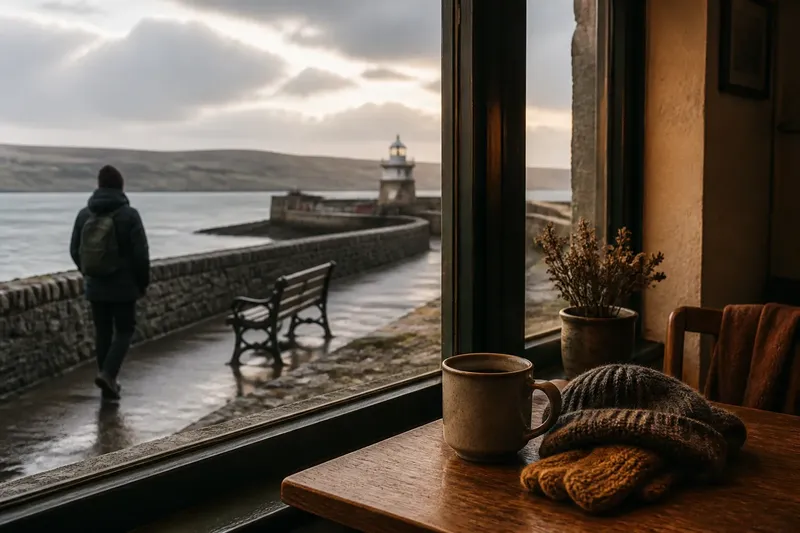
The common mistake on a short winter visit to the shore is to pick a route first and leave the practical details until you arrive. That can turn a gentle outing into a search for shelter, a seat or a way back. Plan around one warm pause, then choose a shoreline stretch that still works if the pause is unavailable.
Think of the day as a small loop between arrival, a nearby point of interest and your chosen stop. You might follow a harbour wall, look at the water from a promenade or take a short path above the beach. The point is to make the route easy to change, not to cover ground.
How do you choose a warm pause?
Choose the kind of shelter that fits the conditions and your group. A coastal café offers indoor warmth and usually a place to sit; a visitor centre may provide shelter without making the stop a meal. A sheltered bench keeps you outdoors, but offers less protection if the wind shifts.
Use a map to check how the stop relates to the shore entrance, bus stop or car park. Prefer a clear, level approach over a scenic detour that adds exposed walking. Check opening times and access information before you leave, and identify a fallback that you can reach without extending the outing.
Make the pause a decision point rather than a destination you must earn. If you arrive chilled or the weather changes, go inside or head back. If you still feel comfortable, take a short look around nearby.
What should you check before setting out?
Check the local forecast for wind and rain, then look at tide information if your route uses the beach or passes close to the water. Read local notices about path closures and access. Conditions can change, so avoid routes that depend on crossing a beach or reaching an exposed edge at a particular moment.
Dress for a stop as well as a walk: wear a wind-resistant outer layer, a warm mid-layer, a hat and gloves. Choose shoes with a secure grip for damp paths. If you plan to sit outdoors, carry a warm drink in a flask where you can reach it easily.
- Indoor stop: Check the café or visitor centre opening information; if it is open and accessible, make it your warm pause, but if it is closed, use your named fallback or shorten the visit.
- Fallback: Check that the alternative shelter is reachable on an easy route; if it is, keep it as a backup, but if it requires a long detour, plan to return instead.
- Approach: Check the route surface and access notes for everyone coming; if it looks manageable, use it, but if not, choose a nearby promenade or viewpoint.
- Weather: Check the forecast for wind and rain; if conditions suit a brief stop, continue with the flexible plan, but if they look uncomfortable, choose an indoor pause or postpone.
- Tide and notices: Check tide information and local restrictions where relevant; if the route remains clear and open, follow it, but if access is uncertain, stay on a marked inland path.
- Return: Check the route back and keep your phone charged; if the return remains straightforward, set off, but if transport or access is unclear, resolve that before leaving.
These checks help you choose a sensible plan; they cannot settle what conditions will be like when you arrive.
How can you keep the route flexible?
Pick one nearby feature as a turning point: a harbour wall, a break in the dunes, a bench above the beach or a place where the view opens. Walk towards it only while the surface and weather feel manageable. From there, either return the same way or continue towards your warm pause if the route is sheltered.
Say you are planning a visit to a harbour on a grey morning. The forecast suggests showers, the café listing says it is open, and the quay path is exposed; your starting point is the bus stop beside the sheltered side of the harbour. You walk along that side to a bench, check the rain and how you feel, then go into the café rather than crossing to the exposed quay. If the café is unexpectedly shut, you turn back to the bus stop instead of searching for another stop. The result is a clear choice at each point, with no need to press on for a distant landmark.
Use the same principle if you arrive by car: keep the car park or an easy access path in view as your return option. A near turning point makes it easier to change plans without making the outing feel unfinished.
What should you do if conditions or energy change?
Choose a simple signal before you set off: cold hands, discomfort on the path or a change in rain can mean it is time to turn back. Do not wait for the warm pause if you already feel uncomfortable. Head for shelter or the return route while that remains straightforward.
Watch the ground as carefully as the weather. Wet steps, slick rock and soft sand can make a short stretch harder to manage. Stay on marked access routes, keep away from unstable edges and follow local safety notices. If you are unsure about a route or your ability to manage it, choose a safer inland path or end the visit.
If you are with someone, agree that either of you can call for an early return. That removes the pressure to keep walking just because the other person seems willing to continue.
How long should a short winter visit to the shore last?
Let the conditions, daylight, access and how you feel determine the length. A short wander followed by one comfortable stop can be enough. Do not add distance simply because you have reached the pause you planned.
Choose a departure cue before leaving: perhaps the first sign that your hands are getting cold, the end of your drink or a point when you want to begin the return. Keep the cue flexible, and leave time to get back without rushing.
What do people ask about a winter visit to the shore?
Should you walk before or after the warm pause?
Either order can work. Go to shelter first if the weather is poor or the stop is close to your arrival point; otherwise, take a short walk before sitting down.
What if the café is closed?
Use the fallback you checked, such as a visitor centre or a sheltered spot for a flask. If no comfortable option is available, shorten the visit and return rather than extending the walk to find another place.
Do you need to walk on the beach?
No. A harbour path, promenade or coastal viewpoint can offer time by the water without a walk on sand. Choose a surface that feels manageable in the conditions.
When should you head home?
Head back when the weather turns, the route feels difficult or you no longer feel comfortable. For a short winter visit to the shore, the return plan matters as much as the place you set out to see.
Before you leave, make sure you know both where you can pause and how you will get back from there. With those choices settled, you can give the shoreline your attention without having to turn the visit into a fixed itinerary.